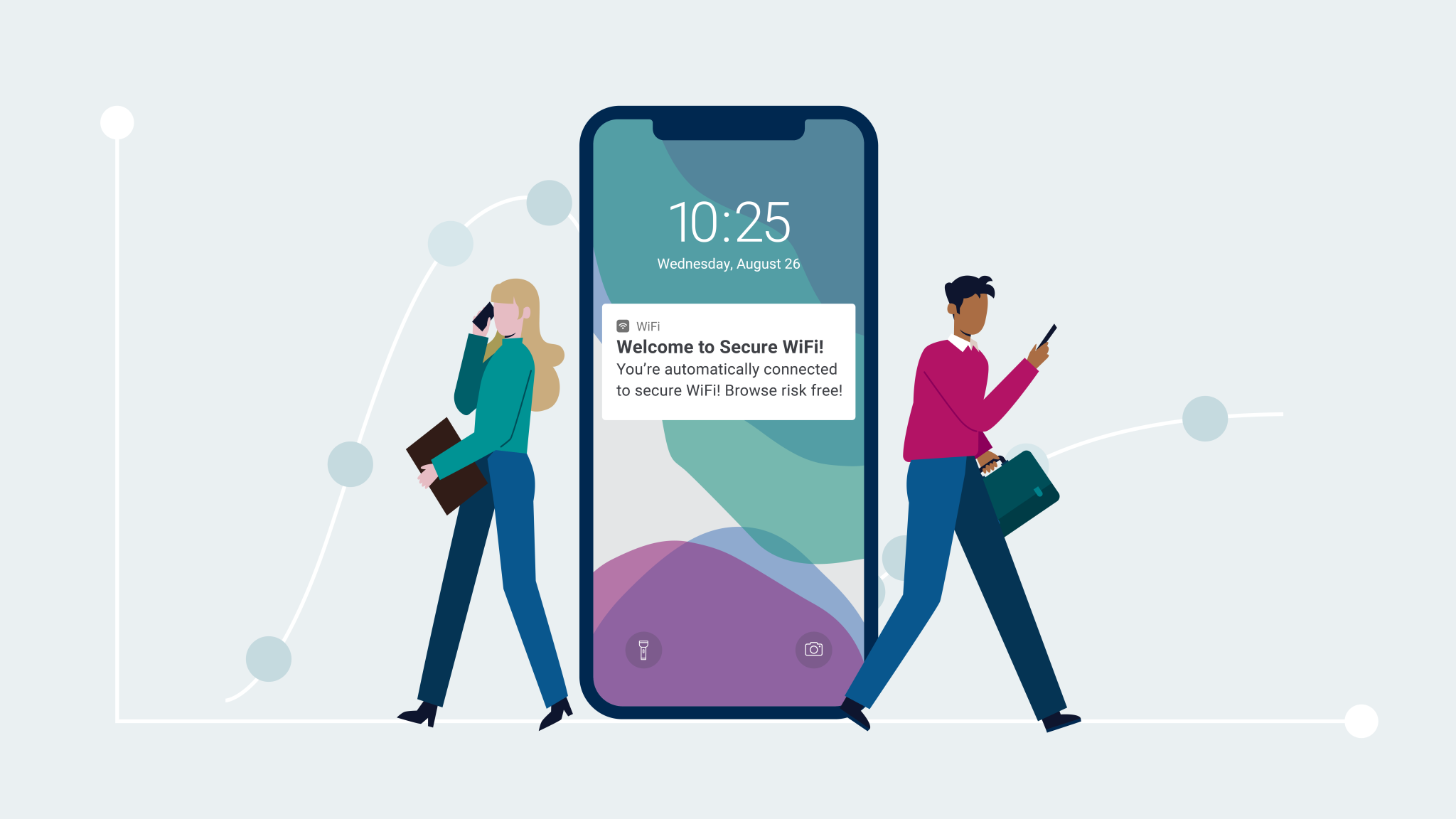
For two decades, public and guest WiFi has been a digital roadblock, perpetually stuck in a loop of user friction. Finding the network, navigating an intrusive captive portal, entering credentials (or watching an ad), and then repeating the process every single time. This pervasive friction represents the single biggest barrier to meaningful digital engagement in physical locations, frustrating customers and limiting the ability of enterprises to capture valuable first-party data.
That era of mandatory logins and insecure connectivity is finally reaching its end.
The Wireless Broadband Alliance (WBA) OpenRoaming framework has emerged as the critical technology poised to standardize how users connect to public and enterprise networks globally. Its importance is underscored by the latest industry analysis: in the Gartner® Hype Cycle™ for Enterprise Networking, WBA OpenRoaming is rated as an “Emerging” technology with a “High Benefit” rating. This is not merely a “nice-to-have” network upgrade: it is a foundational shift that enables significantly increased revenue, operational efficiency, and a dramatically improved customer experience (CX).
At Cloud4Wi, the company is proud to be recognized as a Sample Vendor in this category, helping drive the deployment of this technology across the globe. It is time for CIOs and Digital Transformation Leaders to understand why this technology is crossing the chasm and how a simplified path to deployment is available today.
What defines WBA OpenRoaming and the WBA’s role?
WBA OpenRoaming is, fundamentally, the “cellularization” of WiFi. It is a global, federation-based framework that allows users to connect to WiFi networks automatically, securely, and without any manual login.
The analogy is cellular roaming: a mobile phone automatically roams onto a partner carrier’s network. The user does not ask for a password because the trust is pre-established on the backend between operators. WBA OpenRoaming brings this exact capability to WiFi, solving the identity challenge that has plagued public access for years.
The framework connects two principal parties through a secure global hub:
- Identity Providers (IDPs): Entities that issue a user’s secure digital identity, such as major brands’ loyalty apps, cellular carriers (like AT&T), or technology giants (like Google and Samsung).
- Access Network Providers (ANPs): The enterprises, such as retailers, airports, city centers, and campuses, that broadcast the WiFi signal and agree to accept those trusted identities.
The standard itself is not a proprietary product but a globally managed framework governed by the Wireless Broadband Alliance (WBA). The WBA manages the federation trust framework, which ensures that a credential issued by a trusted IDP is recognized and accepted by any ANP within the federation, making seamless connectivity a global reality.
The Gartner validation: Why “high benefit” matters now
Gartner’s Hype Cycle methodology serves as a critical analytical tool for deciphering the lifecycle of emerging technologies. WBA OpenRoaming’s position, rated “Emerging” with a market penetration of 5% to 20%, places it squarely in a strategic “Goldilocks” zone for IT investment.
- It’s Proven: A market penetration of up to 20% indicates that the technology has moved well past the Innovation Trigger phase and is proven enough to be reliable. Early adopters have successfully implemented it and delivered tangible value.
- It’s Advantageous: Being classified as “Emerging” means the market is still early, allowing enterprises that adopt now to gain a distinct competitive advantage in customer experience (CX).
The “High Benefit” rating is the most critical factor. In Gartner’s framework, this rating signifies that the technology will enable significantly increased revenue, cost savings, and operational efficiency. This is a clear signal to CIOs that the technology investment will drive fundamental business transformation, not just incremental network improvement.
The three pillars of WBA OpenRoaming value
The WBA OpenRoaming standard addresses mission-critical enterprise needs:
- Higher Data Capture: By removing the login barrier, more users connect, driving a significant increase in online engagement. For enterprises in retail, hospitality, and campus environments, this means higher first-party data capture, enabling personalized offers and analytics the moment a customer or student walks in.
- Offload: A key driver of investment is the ability to enable automatic, seamless access between WiFi and cellular networks (5G/LTE). This allows mobile operators to offload traffic from expensive cellular networks to efficient WiFi seamlessly. For the enterprise, this can even become a potential revenue stream, while ensuring a superior quality of experience (QoE) for users.
- Security: WBA OpenRoaming replaces inherently insecure open SSIDs and easily compromised captive portals with WPA2/3 Enterprise encryption and certificate-based authentication (Passpoint). The device authenticates using a secure digital certificate, establishing an encrypted tunnel from the start and eliminating the risk of man-in-the-middle attacks associated with traditional public WiFi.
WBA OpenRoaming in action: adoption trends and market forecasts
The momentum behind WBA OpenRoaming is undeniable. It has moved well past the initial pilot phase, achieving a critical mass that solidifies the Gartner “High Benefit” designation. The framework is currently available at over 3.5 million hotspots worldwide, demonstrating massive, established global scale.
This current deployment level is merely a baseline for future growth. According to the WBA Industry Report 2025, a staggering 81% of industry executives surveyed plan to deploy WBA OpenRoaming by 2026. This confidence is translating directly into action: 25% of executives surveyed report that their organizations are already rolling out the technology today.
The drivers for this steep adoption curve are clearly focused on business transformation:
- Seamless Access between WiFi and 5G/LTE (cited by 44% of investors).
- Providing Improved Security on WiFi (cited by 43%).
- Frictionless Access (cited by 39%).
The data shows that IT leaders view WBA OpenRoaming as a strategic infrastructure decision that aligns their networks with the future of seamless, secure, converged connectivity.
Cloud4Wi: The bridge to the federation
While the WBA sets the global standards, implementing WBA OpenRoaming can be technically complex. It requires specialized backend architecture, including the setup of RadSec nodes, the rigorous management of PKI certificates, and the configuration of Passpoint profiles across multi-vendor networks.
This is where Cloud4Wi, recognized as a Gartner Sample Vendor, eliminates complexity, acting as the turnkey bridge to the federation. The platform abstracts away the technical overhead and allows enterprises to focus purely on the value created by seamless connectivity.
Cloud4Wi serves as both the Access Network Provider (ANP) Broker and Identity Provider (IdP) Broker:
- For Network Access (ANP): The company enables enterprises to “broadcast” WBA OpenRoaming on their existing infrastructure, whether Cisco, Aruba, Juniper Mist, or others, with just a few clicks. The enterprise instantly becomes part of the global federation, allowing millions of users with a recognized IDP profile to connect automatically.
- For User Identity (IdP): The company provides Identity Provider (IdP) as-a-service, offering tools such as an SDK or a web portal. These tools enable enterprises to securely issue their own WBA OpenRoaming/Passpoint profiles. This capability delivers a globally accessible, secure WiFi experience, significantly enhancing the on-premises user experience.
Recommended next steps for IT leaders
WBA OpenRoaming is rapidly moving from an emerging concept to a competitive necessity, a trajectory confirmed by the “High Benefit” designation from Gartner. The days of cumbersome captive portals and compromised guest security are truly ending.
IT leaders have a clear mandate to transition their public and guest access strategies from an area of perpetual friction into a foundational driver of business value. By leveraging specialized platforms like Cloud4Wi, enterprises can seize this opportunity without the burden of complex infrastructure projects, ensuring their physical spaces are optimized for the next generation of seamless digital engagement.
Ready to ditch outdated captive portals for a seamless, secure, and automatic WiFi experience? The future of connectivity is here. Discover how your company can harness the power of WBA OpenRoaming with Cloud4Wi. Request a personalized demo of Cloud4Wi today and let us lead the way to next-generation connectivity.
Frequently Asked Questions (FAQ)
1. What is WBA OpenRoaming and how does it work?
WBA OpenRoaming is a global, federation-based framework that makes public and guest WiFi work like cellular roaming. It allows users to connect to any participating network automatically, securely, and without needing a manual login or captive portal, using a trusted digital credential (Passpoint profile).
2. Why did Gartner rate WBA OpenRoaming as a “High Benefit” technology?
Gartner’s “High Benefit” rating signifies that the technology will enable significantly increased revenue, cost savings, and operational efficiency for adopting enterprises. Its “Emerging” status indicates it is proven enough to be reliable while still providing a distinct competitive advantage for early adopters.
3. How does WBA OpenRoaming enhance network security?
It eliminates the use of insecure open SSIDs and captive portals, replacing them with WPA2/3 Enterprise encryption and certificate-based authentication (Passpoint). This establishes a secure, encrypted tunnel from the start, providing enterprise-grade security for guests and visitors.
4. What is the primary benefit of WBA OpenRoaming for enterprise connectivity?
The primary benefit is frictionless data capture and improved CX. By removing the login barrier, more users connect, allowing enterprises to capture valuable first-party data and offer seamless, personalized digital experiences the moment a customer or visitor arrives. It also enables seamless WiFi and 5G/LTE offloading.
5. How does Cloud4Wi simplify the deployment of WBA OpenRoaming?
Cloud4Wi acts as the turnkey Access Network Provider (ANP) Broker and offers Identity Provider (IdP) As-A-Service. This means the platform handles the technical complexity (RadSec, PKI certificate management) to allow enterprises to join the global federation and issue Passpoint profiles with just a few clicks, regardless of their existing WiFi hardware.