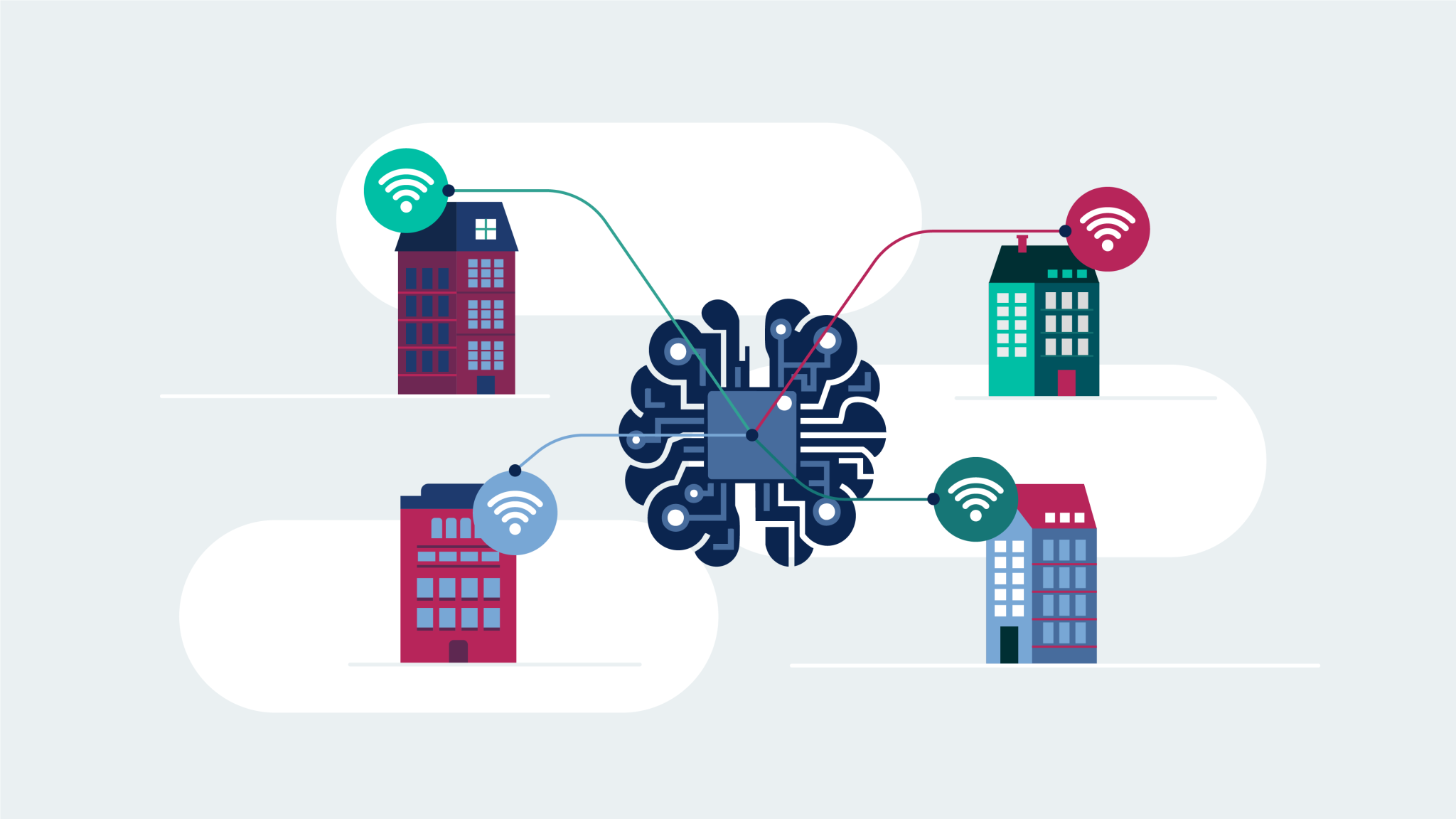
Managing IT for an enterprise with hundreds or even thousands of locations is a challenge of scale. When it comes to WiFi, this challenge becomes exponential.
In today’s complex environments, the traditional “break-fix” approach to network management is no longer effective. IT teams are overwhelmed by a constant barrage of alerts and inconsistent performance data, making manual troubleshooting across various WiFi hardware and numerous sites an impossible task. This leads to a degraded user experience and escalating IT costs.
This is why the market conversation has shifted definitively to Artificial Intelligence.
Enterprises are no longer asking if they need AI, but what kind of AI they need. Buyer research consistently shows a focus on a few key capabilities. It is important to understand what they are, what they mean, and why they are critical for scaling network operations.
The question for enterprises has shifted from whether to adopt AI to which specific AI capabilities are necessary. Buyer research consistently highlights a few crucial capabilities. Understanding these, their significance, and why they are vital for scaling network operations is essential.
AI-driven optimization: Beyond “Is it on?”
For years, “good” WiFi just meant a strong signal. AI-driven optimization redefines this. It’s about intelligently and automatically managing the network for a better experience, not just connectivity.
This includes:
- Dynamic Resource Allocation: Automatically adjusting bandwidth for critical applications during peak business hours and for guest services during lulls.
- Experience-Level Monitoring: Instead of just monitoring if an access point is “on,” AI analyzes the actual user experience—measuring latency, jitter, and application performance—to ensure the network is usable, not just available.
- Business Insights: Advanced AI correlates network data with business outcomes to provide powerful recommendations. In retail, this optimizes store layout and staffing based on footfall; in hospitality, it personalizes guest offers based on real-time location. For corporate real estate and large venues, it provides data-driven insights on space utilization and helps manage crowd flow.
Predictive maintenance: Fixing problems before they exist
The biggest drain on a multi-location IT team is reactive troubleshooting. A WiFi network goes down, a ticket is created, and the fire-drill begins.
Predictive maintenance flips this model. AI engines constantly monitor thousands of data points across every piece of hardware in the network. They are trained to recognize the subtle, almost invisible patterns and anomalies that signal an impending failure.
- Before: An access point fails. Users complain. IT spends an hour diagnosing the problem.
- With AI: The AI detects that an access point has 0.5% packet loss and a slight increase in memory usage—a known precursor to failure. It automatically creates a high-priority ticket (or even triggers a configuration change) to resolve the issue before any user ever notices a problem.
Automated troubleshooting: From co-pilot to auto-pilot
This is perhaps the most significant evolution in AI for networking. It’s the difference between an AI Assistant and an AI Engine.
- An AI Assistant (The Co-Pilot): This powerful AI tool acts as a co-pilot for the IT team, offering 24/7/365 support. It enables natural language queries (e.g., “Why is the WiFi slow in Store #124?”), quickly analyzing data to provide diagnostic answers and reports, thereby helping the IT team identify problems faster.
- An AI Engine (The Auto-Pilot): This is a far more advanced, autonomous system. An AI engine doesn’t wait to be asked. It proactively hunts for anomalies 24/7/365. When it finds one, it automatically triggers its own investigation cycle, often completing it in seconds:
- Investigate: It gathers data from all relevant sources—system logs, hardware health metrics, network configurations, etc.
- Diagnose: It correlates all this data to pinpoint the true root cause (e.g., not just “slow WiFi,” but “a recent firmware update on a specific switch model is causing DHCP errors”).
- Resolve: Based on the diagnosis, the engine either provides a clear, one-click recommendation to the IT team or, in many cases, autonomously executes the corrective action itself.
For enterprises managing thousands of sites, this “auto-pilot” model is the only viable path forward. It’s what allows a lean IT team to effectively manage a massive, complex network by automating the vast majority of troubleshooting tasks.
Multi-location WiFi management: The AI advantage
The AI-driven optimization and fully autonomous engines are not theoretical. They are the new standard for enterprise operations. By embracing AI-powered WiFi, enterprises can unlock unprecedented efficiency, enhance user experiences, and ensure their networks are ready for the demands of tomorrow. The future of connectivity is intelligent, and it’s here now.
At Cloud4Wi, we’ve built the industry’s most advanced AI-first enterprise WiFi platform, centered on Hedy.
Hedy has been evolving from a best-in-class AI Assistant (providing real-time insights, diagnostics, and technical consulting) into a true AI Engine for multi-location operations. Hedy autonomously will run the “Investigate, Diagnose, and Resolve” cycle, detecting anomalies and triggering corrective actions before they can impact the WiFi service.
If you’re ready to stop firefighting and start automating, it’s time to see what an AI-first network can do. Learn more about how the Hedy AI Engine can transform your multi-location operations today. Request a demo today.
Frequently Asked Questions (FAQ)
1. What’s the main benefit of AI for a multi-location business?
Scale. AI allows you to apply a consistent standard of excellence, monitoring, and troubleshooting to 10,000 sites as easily as you do to 10. It reduces the cost and workload on your IT team while dramatically improving the reliability and performance of your user experience.
2. How does AI help with network security?
By establishing a baseline of normal network behavior, AI is incredibly effective at anomaly detection. It can instantly flag a device that is behaving erratically, consuming unusual amounts of data, or attempting to connect to unauthorized parts of the network—all classic signs of a security breach.
3. We already have a network monitoring tool. How is this different?
Traditional monitoring tools are reactive. They tell you after something has broken. An AI-driven platform is proactive and predictive. It tells you that something is about to break and, in many cases, fixes it automatically. It shifts your IT team from firefighting to strategic management.
4. Will this AI platform work with my existing hardware?
The most advanced AI platforms are hardware-agnostic, meaning they are designed to integrate with and pull data from a wide variety of access points, switches, and gateways. This allows you to add a powerful AI layer on top of your existing infrastructure without a costly “rip and replace” project.